Herniated Disc (Lumbar Disc Herniation)

Understanding Lumbar Disc Herniation
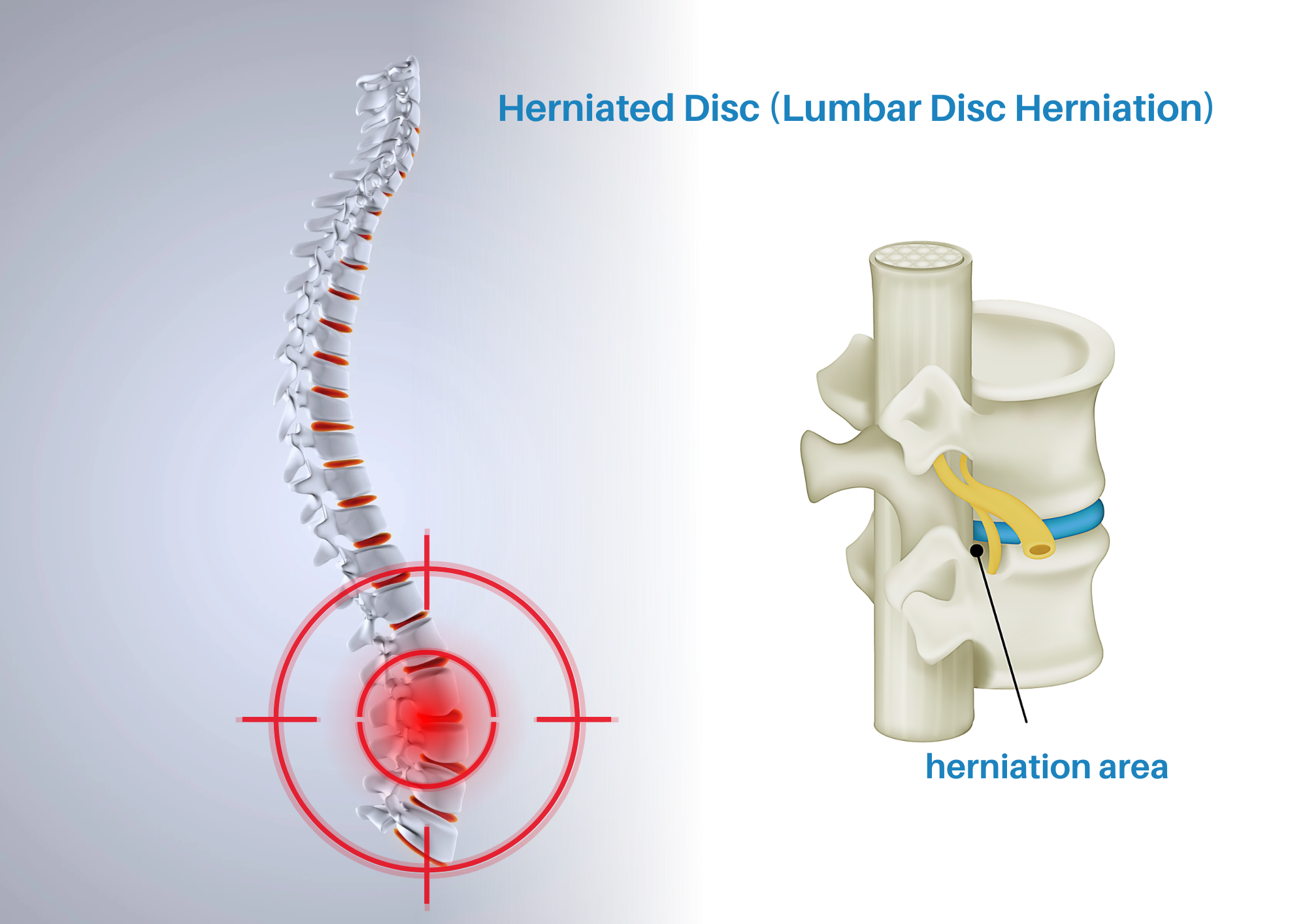
A herniated disc, also known as Lumbar Disc Herniation, is a common spinal condition affecting the lower back. The spine is composed of vertebrae separated by intervertebral discs that act as cushions and shock absorbers. Each disc contains a soft, gel-like center surrounded by a tougher outer layer.
When the inner portion of the disc protrudes through the outer layer, it may compress adjacent spinal nerves. This nerve compression is what leads to pain and neurological symptoms.
Lumbar disc herniation most commonly affects adults between 30–60 years of age, especially individuals with sedentary lifestyles, physically demanding occupations, or age-related degenerative changes.
Causes & Risk Factors
Several factors may contribute to a disc herniation:
- Age-related degeneration of spinal discs
- Prolonged sitting and poor posture
- Repetitive heavy lifting
- Sudden trauma or injury
- Obesity
- Lack of core muscle strength
- Smoking (reduces disc nutrition)
Symptoms of a Herniated Disc
Symptoms vary depending on the severity and nerve involvement. Common symptoms include:
- Persistent lower back pain
- Pain radiating to the buttocks and legs (Sciatica)
- Numbness or tingling sensation in the leg or foot
- Muscle weakness
- Difficulty standing, walking, or bending
In severe cases, patients may experience bladder or bowel disturbances, which require immediate medical attention.
Diagnosis
At BPK9 International Hospital, diagnosis begins with a detailed medical history and physical examination. Advanced imaging studies, such as MRI helps confirm the diagnosis and determine the extent of nerve compression.
Treatment Options
- Conservative (Non-Surgical) Management
Most patients improve with non-surgical treatment, including:
- Pain management medications
- Anti-inflammatory therapy
- Structured physiotherapy
- Posture correction
- Lifestyle modification
- Activity modification
- Interventional Procedures
For persistent pain not responding to conservative care:
- Epidural steroid injections
- Surgical Management
When significant nerve compression causes severe pain or weakness, minimally invasive spine surgery may be recommended to relieve pressure on the nerve while preserving spinal stability.
Why Early Treatment Matters
Delaying treatment may worsen nerve damage and prolong recovery. Early diagnosis allows for effective conservative management in most cases and prevents long-term complications.
Expert Spine Care at BPK9 International Hospital
Our Orthopedic & Spine team provides:
- Comprehensive evaluation
- Advanced diagnostic imaging
- Personalized treatment planning
- Modern minimally invasive spine techniques
- Dedicated rehabilitation services
If you are experiencing persistent back pain or leg symptoms, do not ignore the signs. Early consultation leads to better outcomes and faster recovery.
Heart of Care Essential Care for You
